The Cunning of Freedom by Ryszard Legutko
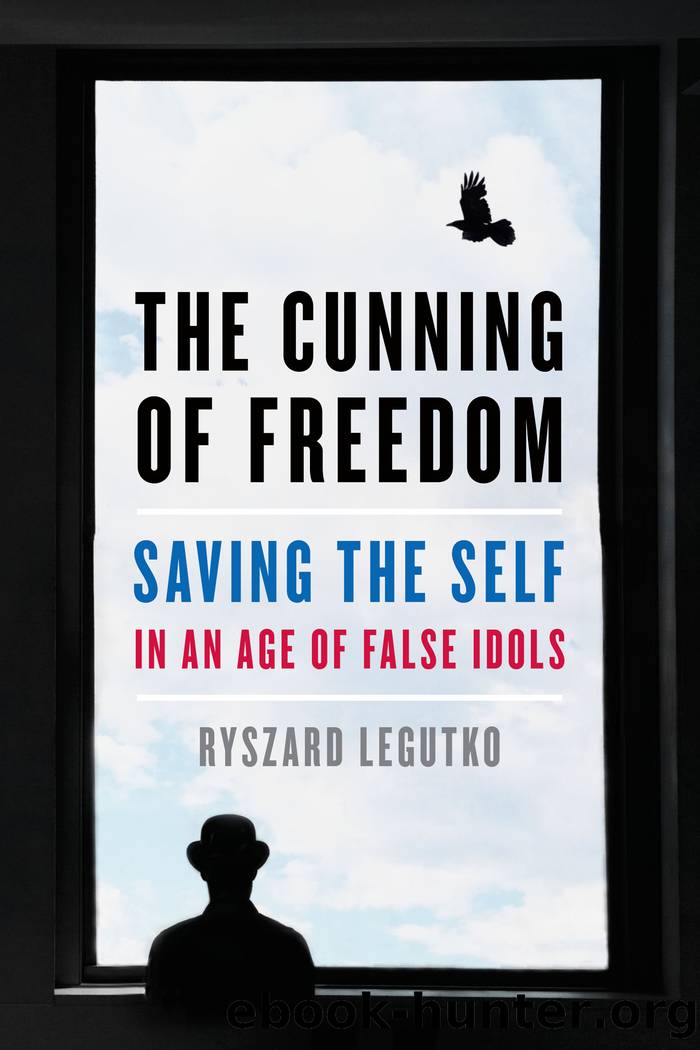
Author:Ryszard Legutko
Language: eng
Format: epub
Publisher: Encounter Books
Published: 2020-08-14T16:00:00+00:00
THE ARISTOCRAT IN A LIBERAL DEMOCRATIC SOCIETY
There should be no dispute over the positive, nay, indispensable role of the aristocrat in a liberal democratic society. Ever since the time of the Founding Fathers of the United States and Alexis de Tocqueville, perceptive analysts of democracy have emphasized the need to reintroduce an aristocratic, or equivalent, element into the (liberal) democratic system. This role is even more necessary today when egalitarianism seems to be triumphant and opposition to its rule meek and limp.
Unfortunately, the sound hypothesis of de Tocqueville and others never caught sufficient attention, and the world moved with increasing speed in a direction that wise men found particularly disquieting. In the eyes of contemporary man, a world in which aristocrats might have some influence looks as fantastic and as grotesque as a world that legitimizes witches, sorcerers, and slave owners.
There are four crucial things that the aristocrat should contribute to the modern world to countervail its ideological tendencies: the rejection of historical inevitability; the defense of the ethics of obligations; an acceptance of body/soul dualism with the soul taking the dominant position; and a classical concept of shame. All of them are interrelated.
Let us start with the modern ideology of inevitability. According to the classical and Christian doctrines, the aristocratâs freedom stemmed from excelling at the rules of a noble life irrespective of widespread social preferences, historical circumstances, and political imperatives, not to mention powerful bodily appetites. The modern view is that manâs road to freedom is simpler, marked by clear instructions and signposts. It is enough to follow human urges and overstep the limitations imposed by Christian religion and classical philosophy. Akolasia and pleonexia are no longer viewed as sins or transgressions to be avoided or feel guilty about when committed; they are vehicles of emancipation.
Todayâs road to freedom, although envisioned as going forward, looks like a return to natureâthe shrugging off of all the unnecessary artifices that were created out of ignorance, fear, and irrational sentiments. This change has been declared largely as a one-way process, a transition from artificial inconvenience to natural convenience where, having reached the destination, going back to the old state of affairs seems unimaginable. Or, to use a different image, as unburdening oneself from cumbersome and excessive objects long believed to be intrinsic. Put in more philosophical terms, it has been a gradual victory for the body which, as everyone knows, very much exists and demands to have its needs fulfilled, over the soul, which may or may not exist, but whose claims have come to be perceived as irritatingly unrealistic.
All this has given the process of the bodyâs emancipation a trait of inevitability. It is generally perceived that there was something relentless in the bodyâs victory over the soul. This inevitability resembled an unstoppable, predetermined process, akin to moving from fiction to reality, from alchemy to chemistry, from witchcraft to medicine, from Byzantine etiquette to simple rules of conduct, from royalism to democracy. This process is believed to illustrate the natural
Download
This site does not store any files on its server. We only index and link to content provided by other sites. Please contact the content providers to delete copyright contents if any and email us, we'll remove relevant links or contents immediately.
| Anthropology | Archaeology |
| Philosophy | Politics & Government |
| Social Sciences | Sociology |
| Women's Studies |
The Secret History by Donna Tartt(19311)
The Social Justice Warrior Handbook by Lisa De Pasquale(12227)
Thirteen Reasons Why by Jay Asher(9009)
This Is How You Lose Her by Junot Diaz(6963)
Weapons of Math Destruction by Cathy O'Neil(6371)
Zero to One by Peter Thiel(5875)
Beartown by Fredrik Backman(5848)
The Myth of the Strong Leader by Archie Brown(5552)
The Fire Next Time by James Baldwin(5508)
How Democracies Die by Steven Levitsky & Daniel Ziblatt(5276)
Promise Me, Dad by Joe Biden(5192)
Stone's Rules by Roger Stone(5133)
A Higher Loyalty: Truth, Lies, and Leadership by James Comey(5020)
100 Deadly Skills by Clint Emerson(4975)
Rise and Kill First by Ronen Bergman(4841)
Secrecy World by Jake Bernstein(4805)
The David Icke Guide to the Global Conspiracy (and how to end it) by David Icke(4776)
The Doomsday Machine by Daniel Ellsberg(4557)
The Farm by Tom Rob Smith(4556)
